The exposure of human bodies has been a practice that has existed since ancient times, although the way in which it has been carried out has changed throughout history. In ancient times, mummification was practiced in some cultures, while in others the bodies of enemies fallen in battle were exposed.
The exhibition of human bodies for educational or scientific purposes began to take shape in Europe during the 18th century, when the first anatomy academies were established.
Today, the exhibition of human bodies has become a global phenomenon, with exhibits showing whole bodies or parts of the human body dissected and preserved. These exhibits are presented as an opportunity to learn about human anatomy and health, but they have also generated controversy and criticism for the way the bodies are obtained, the respect for the deceased and the ethics behind their display.
Tissue preservation techniques used in human anatomy
There are several tissue preservation techniques used in anatomy for the preparation of specimens for study, teaching and long-term preservation. In the case of preserving blood vessels, some of these techniques are:
Plastination
Plastination is a tissue preservation technique developed in the 1970s by the German anatomist Gunther von Hagens. In plastination, a process of dehydration and fluid replacement is used to replace tissue fluids and lipids with plastics or synthetic resins, creating a permanent sample of human or animal tissue.


Corrosion molding
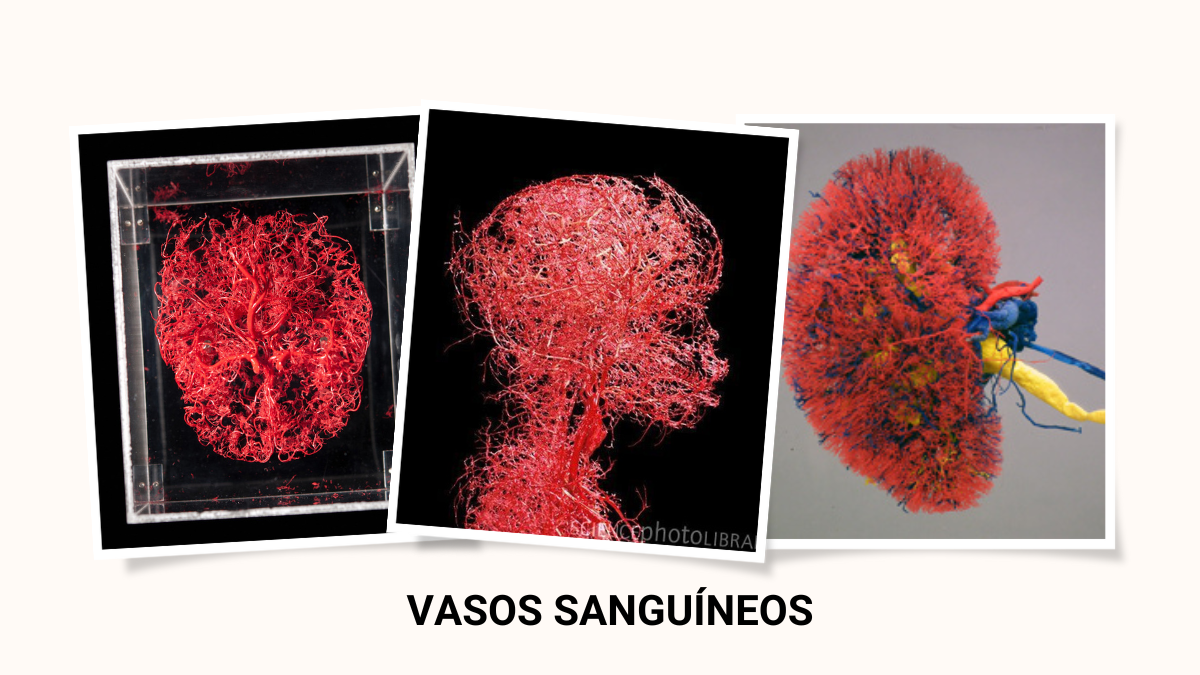
Corrosion molding is a technique used in anatomy to create a three-dimensional replica of blood vessels and other duct systems in the human or animal body.

In this technique, a liquid plastic or metallic material is injected into the duct system and, once the material solidifies, the tissue is immersed in a chemical solution that dissolves the soft tissue and exposes the three-dimensional cast of the duct system. This process is known as “digestion” or “corrosion” of the soft tissue, and may take several days or even weeks to complete.

Once the soft tissue has been dissolved, an exact replica of the body’s blood vessels and other duct systems is obtained in their original three-dimensional structure. This replica can be studied and used in teaching and research in anatomy, physiology and pathology.


Corrosion casting is a valuable technique in vascular disease research, as it allows detailed visualization of vascular structures and can be used to study the relationship between the structure and function of blood vessels and other conduit structures in the body.


Luminal casting
Luminal casting is a technique in which a liquid or polymer is injected into the blood vessels to create a three-dimensional mold of them.
These are just some of the techniques used for the preservation of tissues for study in anatomy. The choice of technique will depend on the type of tissue, the purpose of the preparation and the method of study to be used.