Astronomers have found a way to translate the twinkling of massive stars into sound, revealing the inner motions of these celestial bodies.
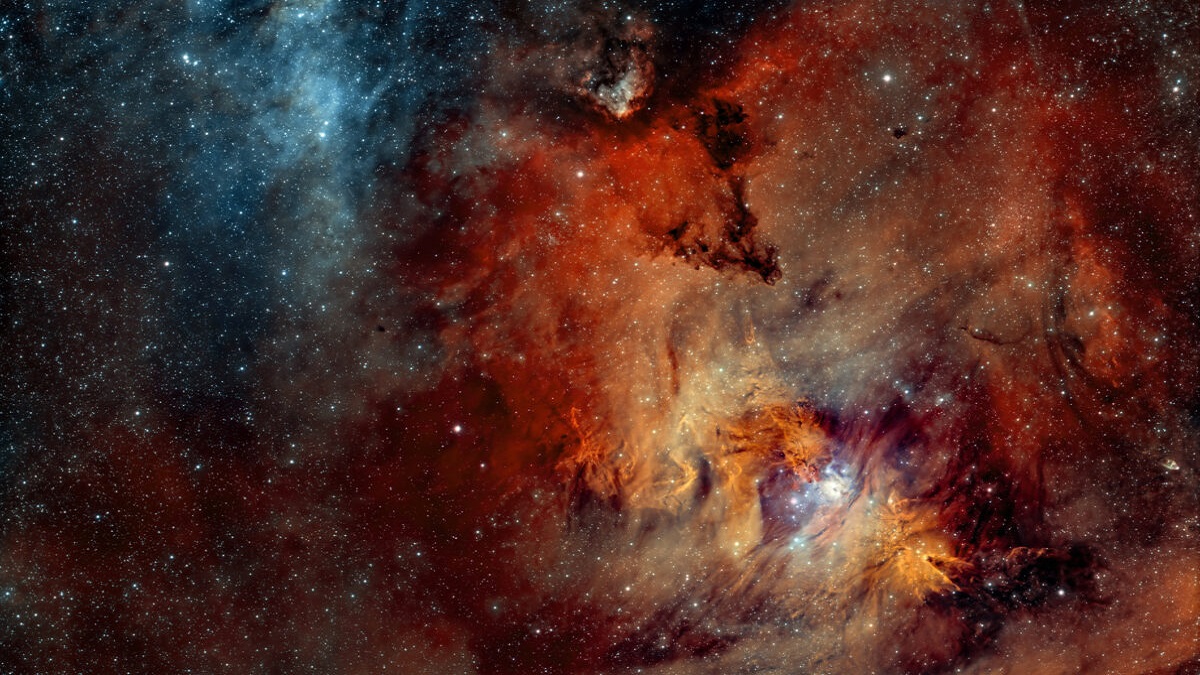
While on Earth we usually see stars twinkling due to atmospheric effects, this sound reveals the twinkling caused by movements inside the stellar cores.
Gas waves originating in the turbulent and chaotic “convection zones” of the interior of massive stars produce this scintillation effect.
Scientists at Northwestern University created three-dimensional simulations of the energy flowing from a star’s core to its surface, allowing astronomers to learn how the flickering waves are expected to appear.
These simulations were then converted into audio tracks to illustrate the wave motion, although the frequencies were increased to make them audible to humans.
This innovative technique could help scientists learn more about what happens inside massive stars, including how they form, evolve and create essential elements such as oxygen.
Future telescopes could detect these subtle flickering waves and probe the inner regions of stars where heavy elements form.