Researchers have discovered liquid blood in a foal dating back over 42,000 years, sparking excitement among scientists interested in cloning extinct animals. In fact, Russian scientists managed to extract the vital fluid from the ancient horse, which was frozen in Permafrost.
Perfectly Preserved Foal

This discovery took place in 2018 and is the second in the history of paleontology in which liquid blood could be obtained. The first case was recorded in 2013 when a team of scientists found the half of an adult female mammoth’s corpse that also contained liquid blood.
The foal, which was only a few weeks old, was found in August 2018 trapped in Permafrost at a depth of 30 meters in the Batagaika Depression in Eastern Siberia. The preservation was due to the permafrost, which kept the horse’s body nearly intact, with preserved skin, fur, muscle tissues, and well-preserved organs.
This level of preservation is extremely rare in paleontological findings, as many specimens are often incomplete, fragmented, or poorly preserved.
The horse belongs to the Lenskaya breed, native to the Yakutia region where the fossil was found, but it is currently extinct. Scientists took samples of liquid blood from the preserved heart tissue of the animal.
Possible Cloning
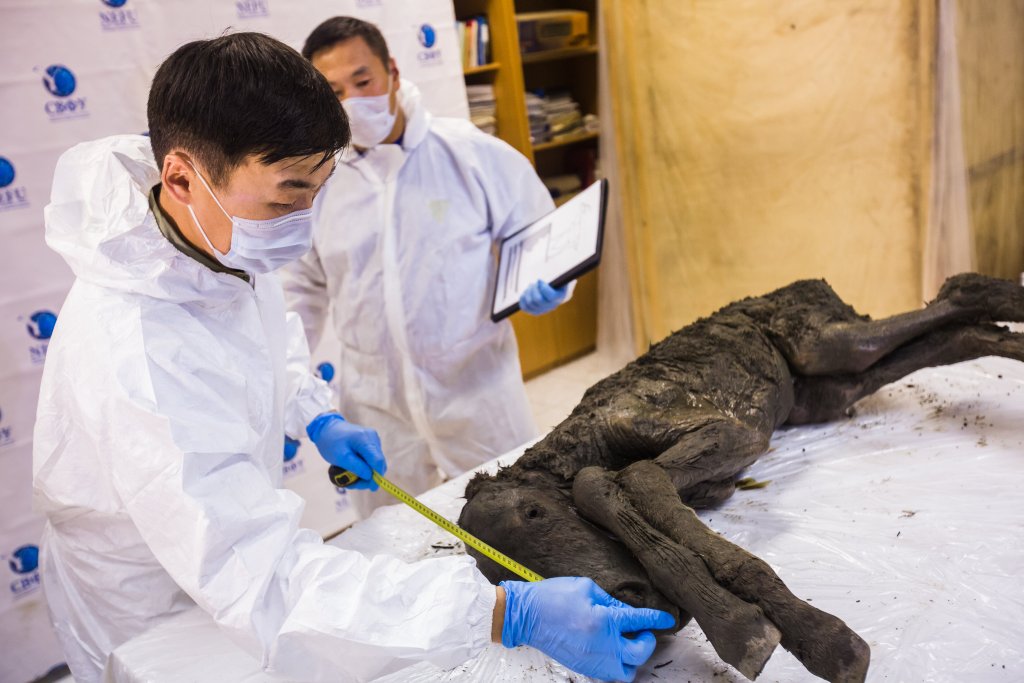
A team of researchers from the Northeast Federal University of Yakutsk and the Sooam Biotech Research Foundation in South Korea is working on the extraction and cultivation of cells from the foal with the goal of cloning it.
Although they have made more than 20 attempts in two months, they have not yet achieved successful cloning. Semyon Grigoryev, the director of the Mammoth Museum at the University, remains hopeful but admits that cloning remains a challenging endeavor.
The same team is currently working on replicating cells from a woolly mammoth found in Siberia in 2013.
Once the research on the horse is completed, scheduled for June, the specimen will be transported to Japan to be included in a one-year exhibition alongside other samples of extinct animals, such as a woolly mammoth, an ancient partridge, and a Siberian bison.
It’s astounding how nature can conspire to preserve a foal from thousands of years ago in such a way that its blood remains liquid. Now, we can only wait and see if science is advanced enough to bring it back to life once more.